
What does my fireplace damper do, and what if it's stuck or won't close?
A fireplace damper is the metal door between your fireplace and the chimney. Open it all the way before you light a fire and leave it open until the ashes are cold. Keep it closed the rest of the time so summer heat, winter drafts, dust and critters stay outside.
 Becky DerendalArizona Chimney & Air Ducts · · Updated · 7 min read
A fireplace damper is the metal door between your fireplace and the chimney. Open it all the way before you light a fire and leave it open until the ashes are cold. Keep it closed the rest of the time so summer heat, winter drafts, dust and critters stay outside.
If your damper is stuck, rusted, bent or blew open in a monsoon, don't light a fire until someone has looked at it. Here's how dampers work, why they fail, and what to do next.
What a fireplace damper does
Your chimney is a straight path from the living room to the sky. The damper is the lid. Open, it lets smoke and gases rise up and out. Closed, it seals the opening so the air you paid to cool or heat doesn't drift up the flue.
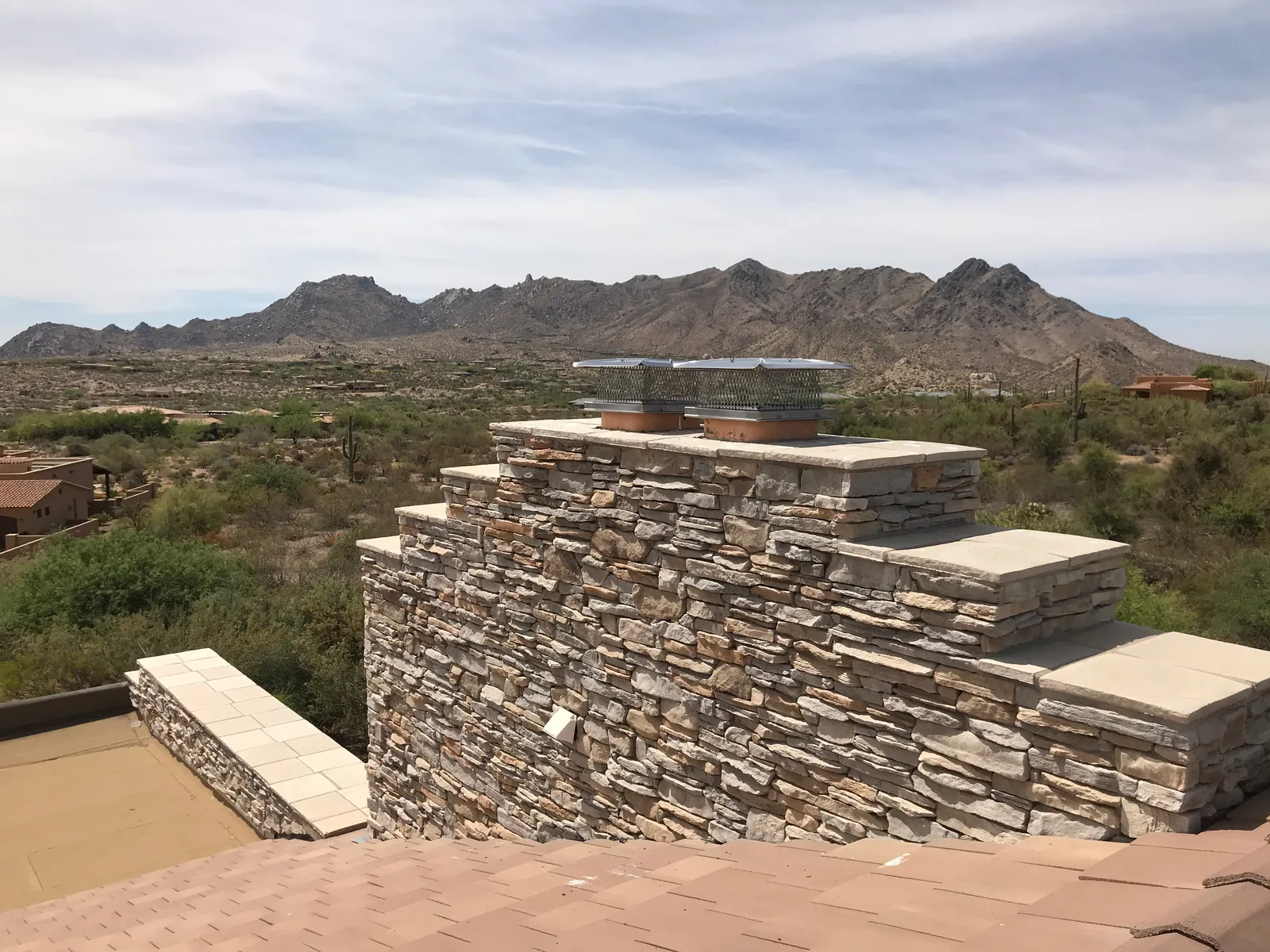
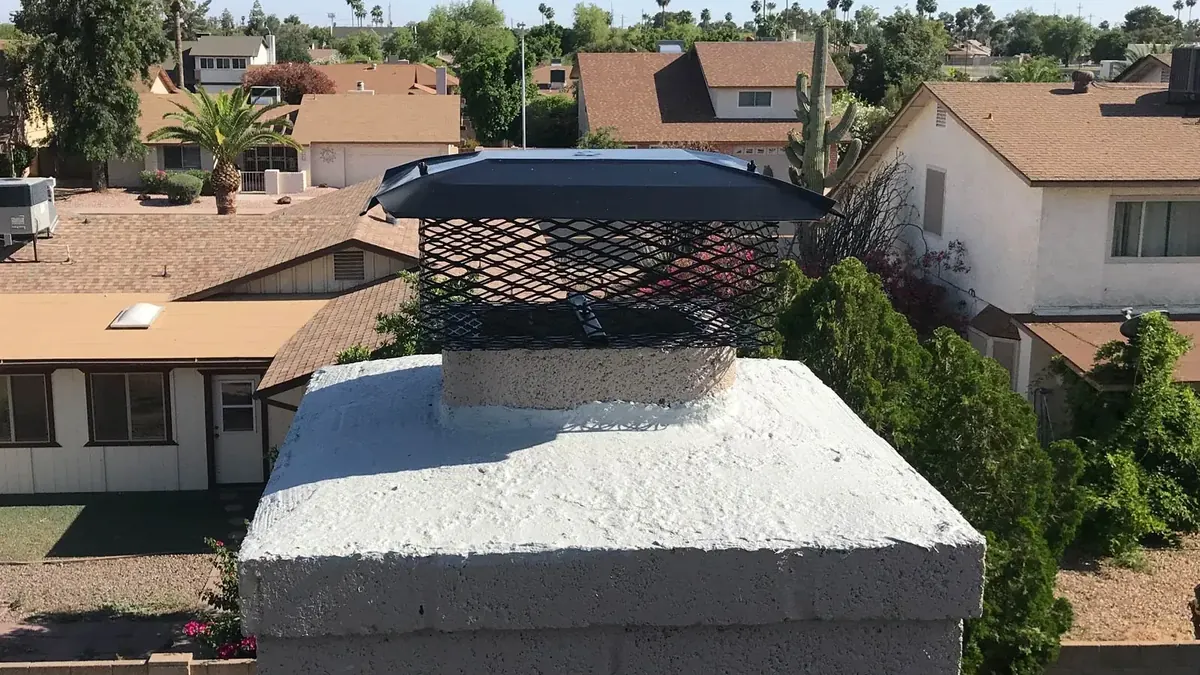
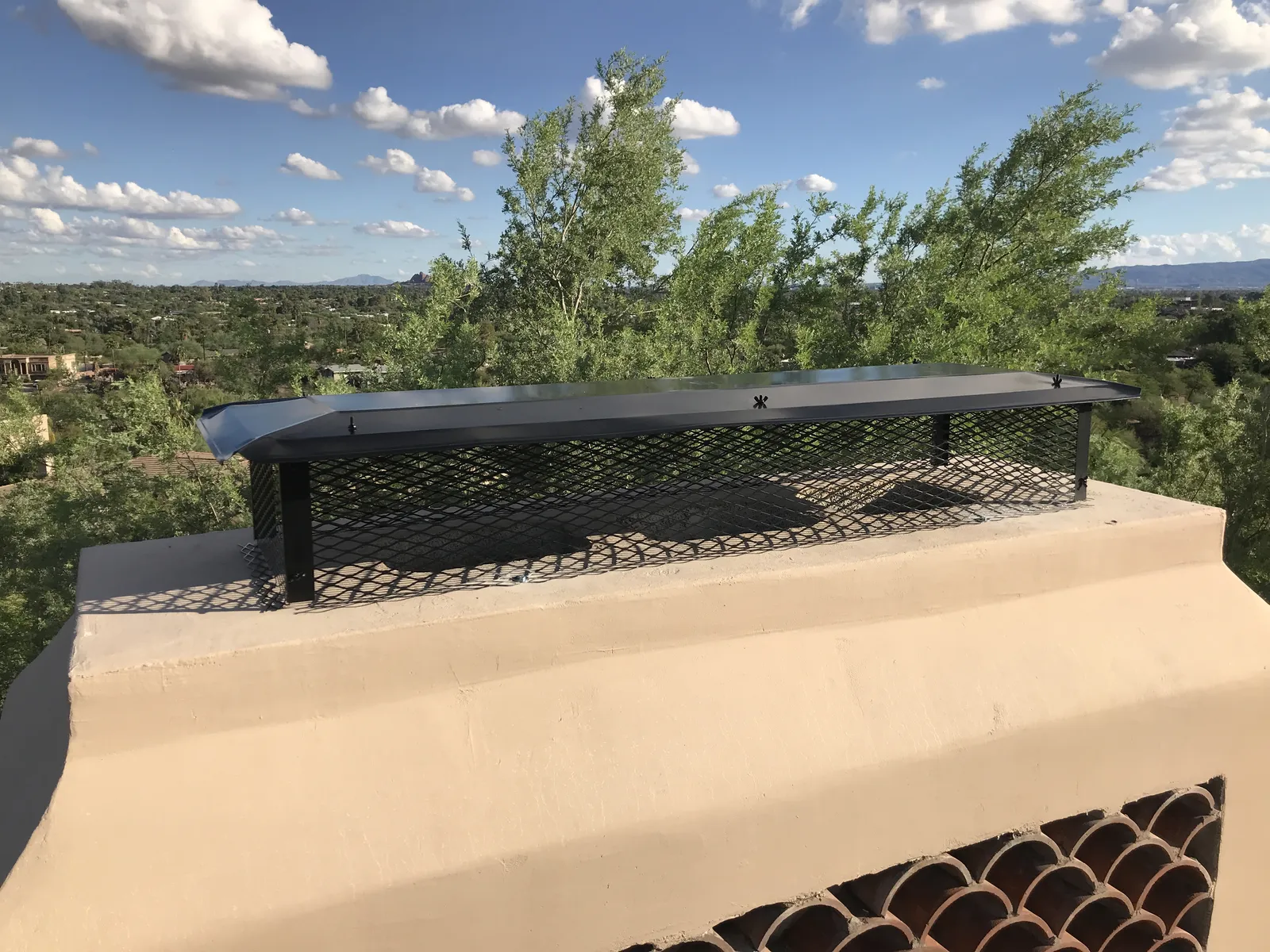
Most Valley homes have one of two kinds. A throat damper is a metal plate just above the firebox, worked by a handle, lever or turn key inside the fireplace. A top-sealing damper sits at the very top of the chimney and closes against a gasket. You work it with a cable or chain that hangs down inside the fireplace. Top-sealing dampers are often paired with a chimney cap, which keeps rain and animals out of the flue.
Should the fireplace damper be open or closed?
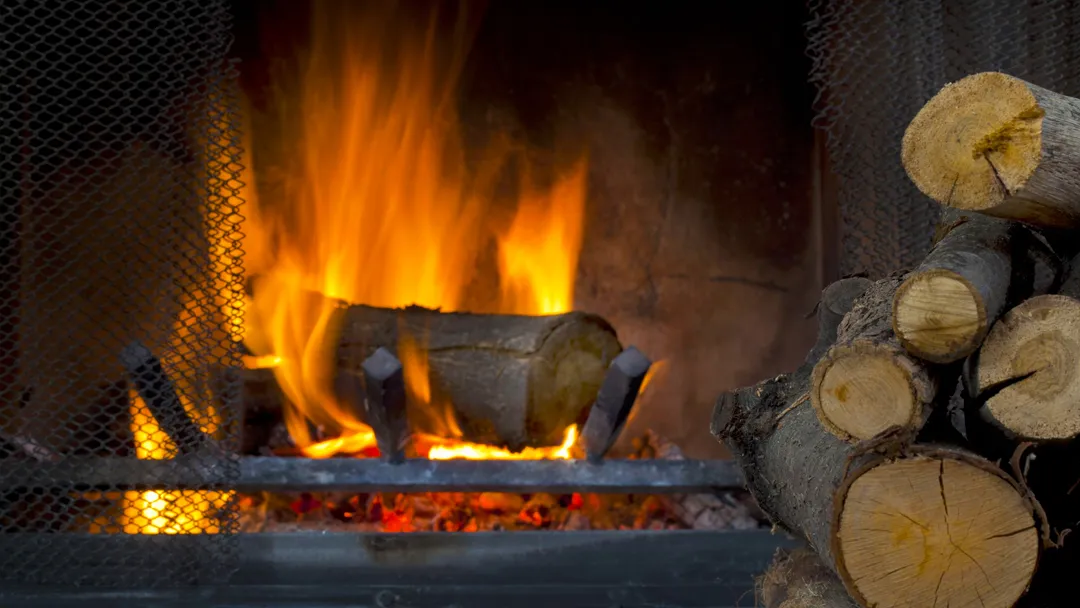
Open when there's a fire. Closed when there isn't. That's the whole rule, with a few details that trip people up.
- Open it before you light anything. A closed or half-open damper pushes smoke and carbon monoxide back into the room.
- Leave it open until the fire is completely out and the ashes are cold. Embers keep making smoke and gas long after the flames are gone.
- Close it the rest of the year. An open damper lets cooled air escape in summer and cold air pour in on winter nights.
- If you have gas logs, it never closes. The section on damper clamps explains why.
How to tell if it's open
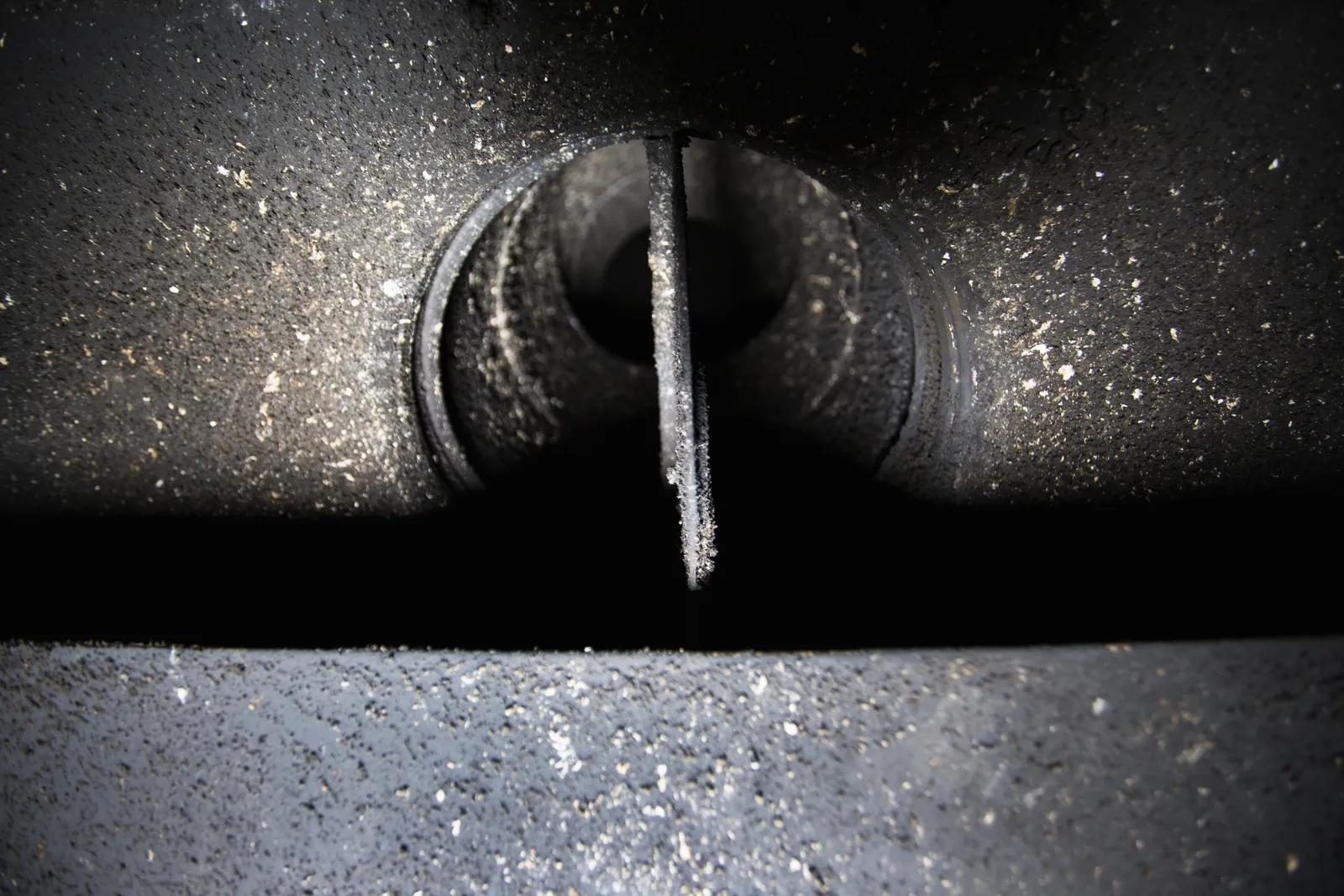
Shine a flashlight up past the top of the firebox. With a throat damper, you'll see the plate lying flat across the opening when it's closed, or a gap into the flue when it's open. With a top-sealing damper, you'll see a little daylight at the top during the day when it's open. You can also hold your hand near the top of the firebox. A draft you can feel means it's open.
Why dampers stick, rust or won't close
A damper is a simple part, but it lives in a rough spot: soot and creosote below, weather above. A damper that's getting hard to move is also a sign the chimney may be due for a cleaning. Our guide to how often to clean a chimney covers the schedule. These are the usual reasons a damper stops working.
- Rust. Rain coming down an uncapped chimney rusts metal parts, so the damper gets hard to open or close, or sticks in place.
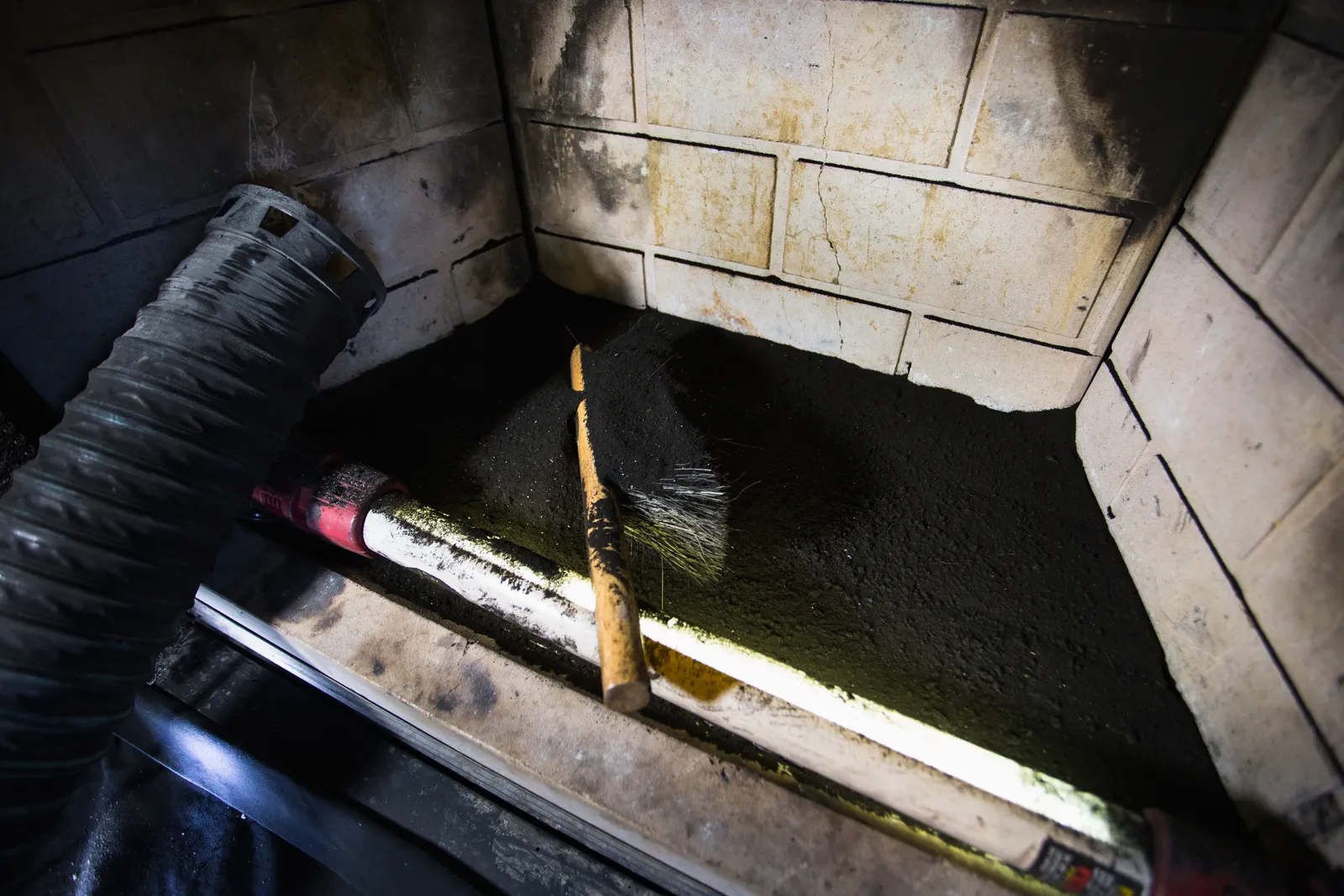
- Soot and creosote. Buildup on the plate and frame can keep it from moving freely or closing flat.
- Heat. Years of fires can warp the plate or frame so it no longer seals.
- Wind. Top-sealing dampers sit on the roof, where strong gusts can catch the lid.
- Debris and nests. Leaves, twigs and nesting material can jam the plate open or shut.
Monsoon season is hard on dampers here. One homeowner called after a storm: "We need a new damper as the old one was blown off during a monsoon." Another told us, "Our damper in our chimney keeps blowing open with these heavy winds."
What to do if your damper is stuck or won't close
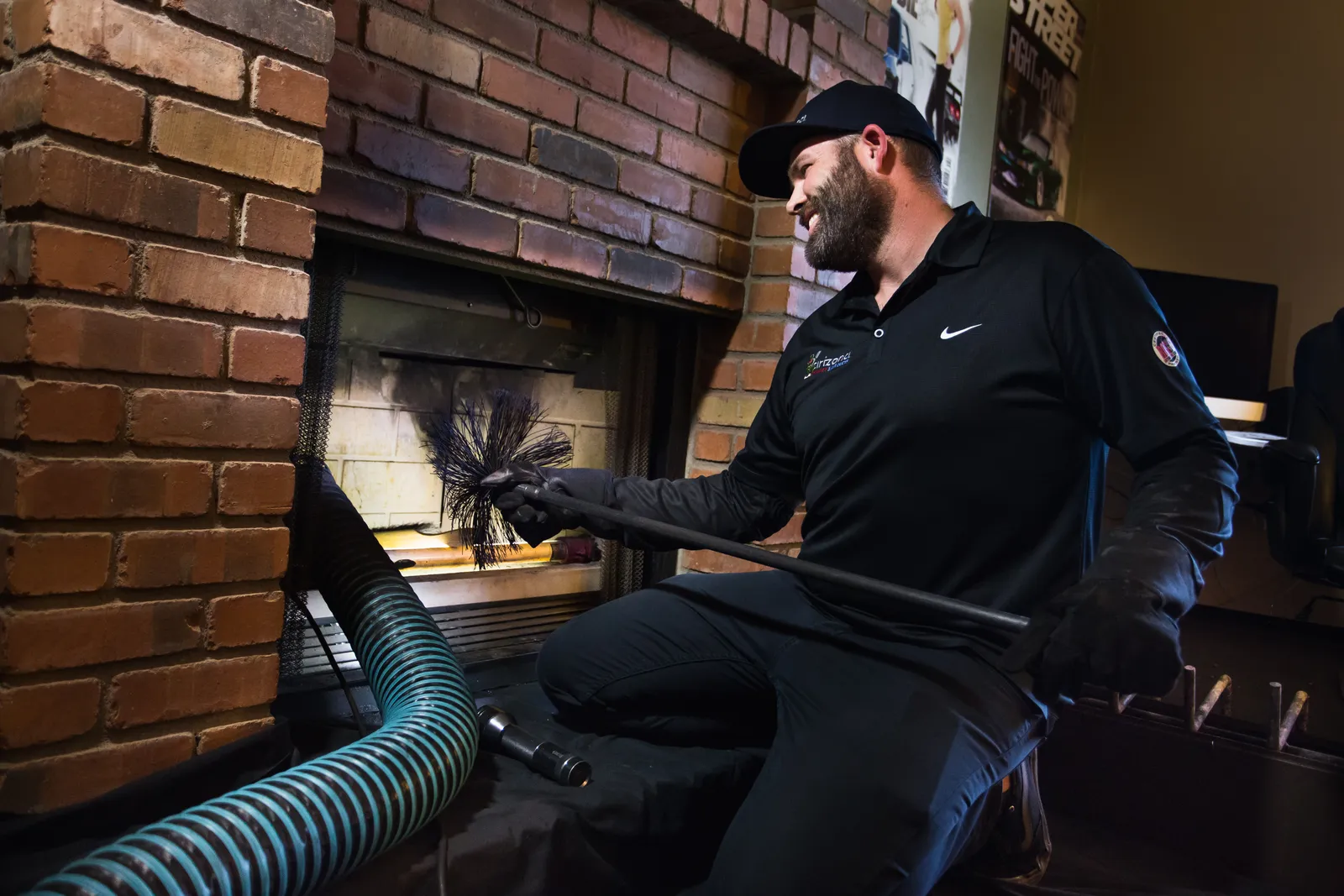
When we clean a chimney, the technician cleans the firebox all around the damper, straight up to the top of the flue, and checks that the damper is working properly. It's a no-mess service, with drop cloths and HEPA vacuums on every job. We work across Phoenix and the towns on our service area page.
Throat damper or top-sealing damper?
Throat damper
- Sits just above the firebox, inside the fireplace.
- Metal closes against metal, so some air always leaks past.
- Built into the masonry, so it's hard to replace once it's rusted or warped.
Top-sealing damper
- Sits at the top of the chimney and closes against a gasket.
- Seals the flue when it's not in use, which helps keep out heat, dust, rain and animals.
- Worked by a cable or chain inside the fireplace. Wind can damage one that's worn or left loose.
We install top-sealing dampers, which seal the flue when it's not in use. You'll find them with the rest of our chimney services, including caps, crowns, chase covers and bird work.
Gas logs and the damper clamp
If you've put gas logs in a wood-burning fireplace, the damper has to stay open all the time, even when the logs are off. Gas logs burn with an open flame that makes carbon monoxide, and a closed damper would trap it in the room.
The City of Phoenix building code adopts the 2024 International Fuel Gas Code (city code history). The International Code Council explains that under this code, the damper plate in a fireplace with a decorative gas appliance must be removed or permanently fixed open (ICC Code Corner). The usual way to do that is a small metal clamp, also called a damper stop or damper lock.
Home sales often catch a missing clamp. One condo owner told us, "We're selling our condo and they're requiring us to fix fireplace damper clip repaired and installed."
What Valley homeowners call us about
Here are damper problems Valley homeowners have described to us, in their own words:
- Drafts: "I would like to add damper to stop hot and cold drafts coming into the home in the summers and winters."
- Stuck dampers: "My damper stuck. It won't open up."
- Smoke in the room: "I think that the damper is damaged. I think it's like halfway because some of the smoke does get out, but also some of it comes back in the room."
- Storm damage: "We need a new damper as the old one was blown off during a monsoon."
That first caller also wrote, "My chimney is not used." A damper that doesn't seal lets the Valley's summer heat and winter chill in whether you burn fires or not.
Fireplace damper questions
Should the fireplace damper be open or closed when I'm not using it?
Closed, unless you have gas logs. A closed damper keeps out hot summer air, winter drafts, dust and animals. Open it before every fire and leave it open until the ashes are cold.
Is it safe to use my fireplace if the damper only opens part way?
No. A damper that won't open fully can push smoke and carbon monoxide back into the room. Leave the fireplace off until the damper is cleaned or repaired.
Do gas fireplaces have a damper?
Gas logs set in a wood-burning fireplace do, and that damper must be fixed open, usually with a clamp. Many factory-built gas-only fireplaces have no damper at all. If you're not sure which you have, check the manual or ask a chimney professional.
Can I fix a stuck damper myself?
You can look at it from inside the fireplace with a flashlight, but don't force it or climb on the roof. Many stuck dampers just need cleaning, and a rusted or warped one may need replacing. A chimney technician can tell you which.