
Why does my fireplace smell, even when I'm not using it?
When a fireplace smells and you haven't lit a fire, the usual cause is creosote inside the chimney. Rain, a nest or air being pulled down the flue makes it worse, which is why many Valley homeowners first notice it after a storm.
 Becky DerendalArizona Chimney & Air Ducts · · Updated · 6 min read
When a fireplace smells and you haven't lit a fire, the usual cause is creosote inside the chimney. Rain, a nest or air being pulled down the flue makes it worse, which is why many Valley homeowners first notice it after a storm.
A cleaning and a cap fix most fireplace smells. One smell is different: if you smell rotten eggs, that's a possible gas leak, not the chimney. Get out of the house first.
What makes a fireplace smell when it's not in use
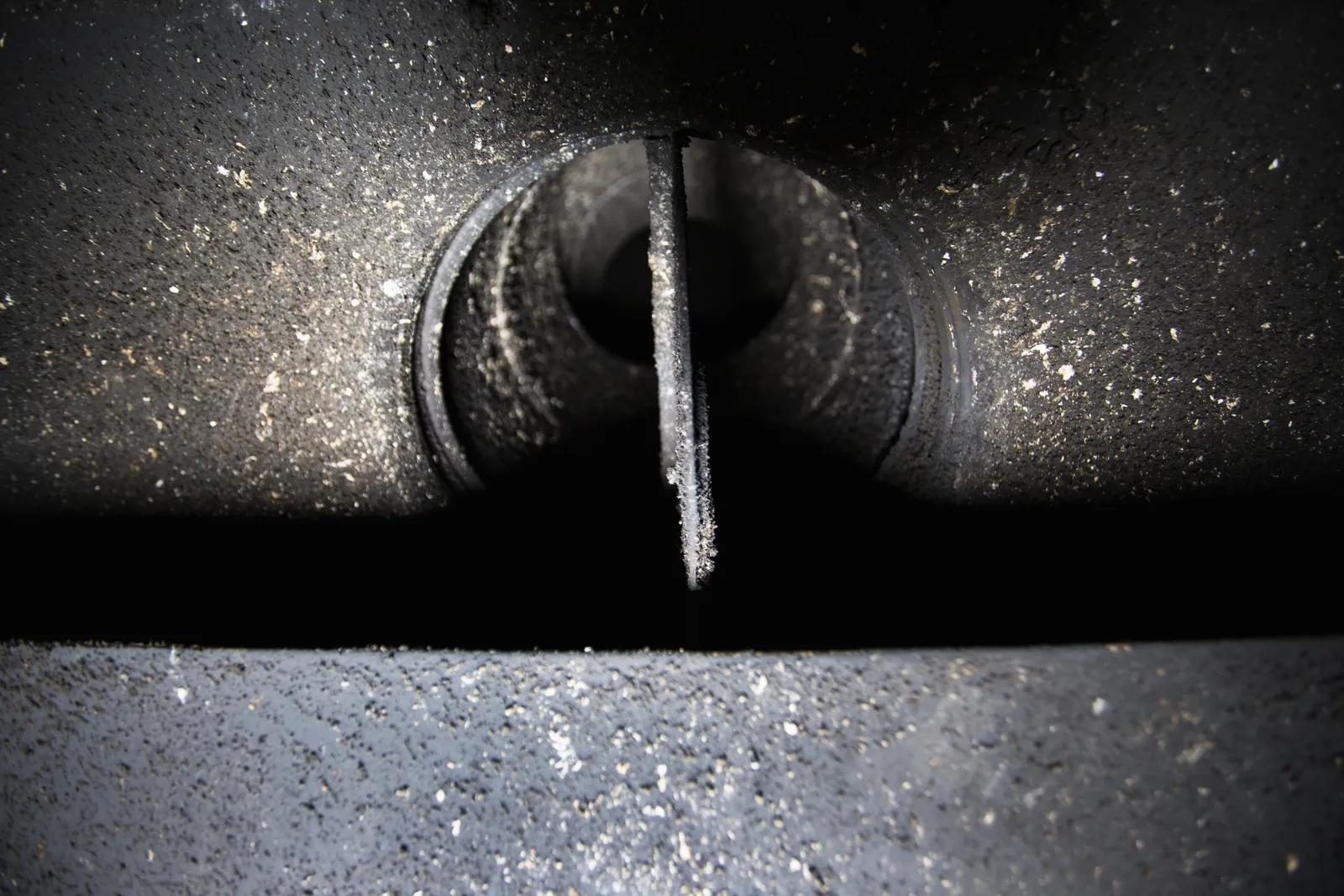
Every wood fire leaves creosote, a sooty, tar-like coating, on the inside of the chimney. It doesn't go away when the fire does. Over time it gives off a stale, smoky, campfire smell, and the smell comes into the house when air moves down the flue. These are the four things we look for.
Creosote
The most common cause. A sharp, stale smoke smell that hangs around the fireplace for days.
Rain and moisture
Water coming down the chimney wets the creosote and soot. The smell gets stronger and can turn musty.
Animals and nests
Birds and other animals nest in open chimneys. Droppings and nesting material smell, and so does an animal that got trapped.
Air pulled down the flue
When a house pulls in air, the chimney can become the easiest way in. The air brings the chimney's smell with it.
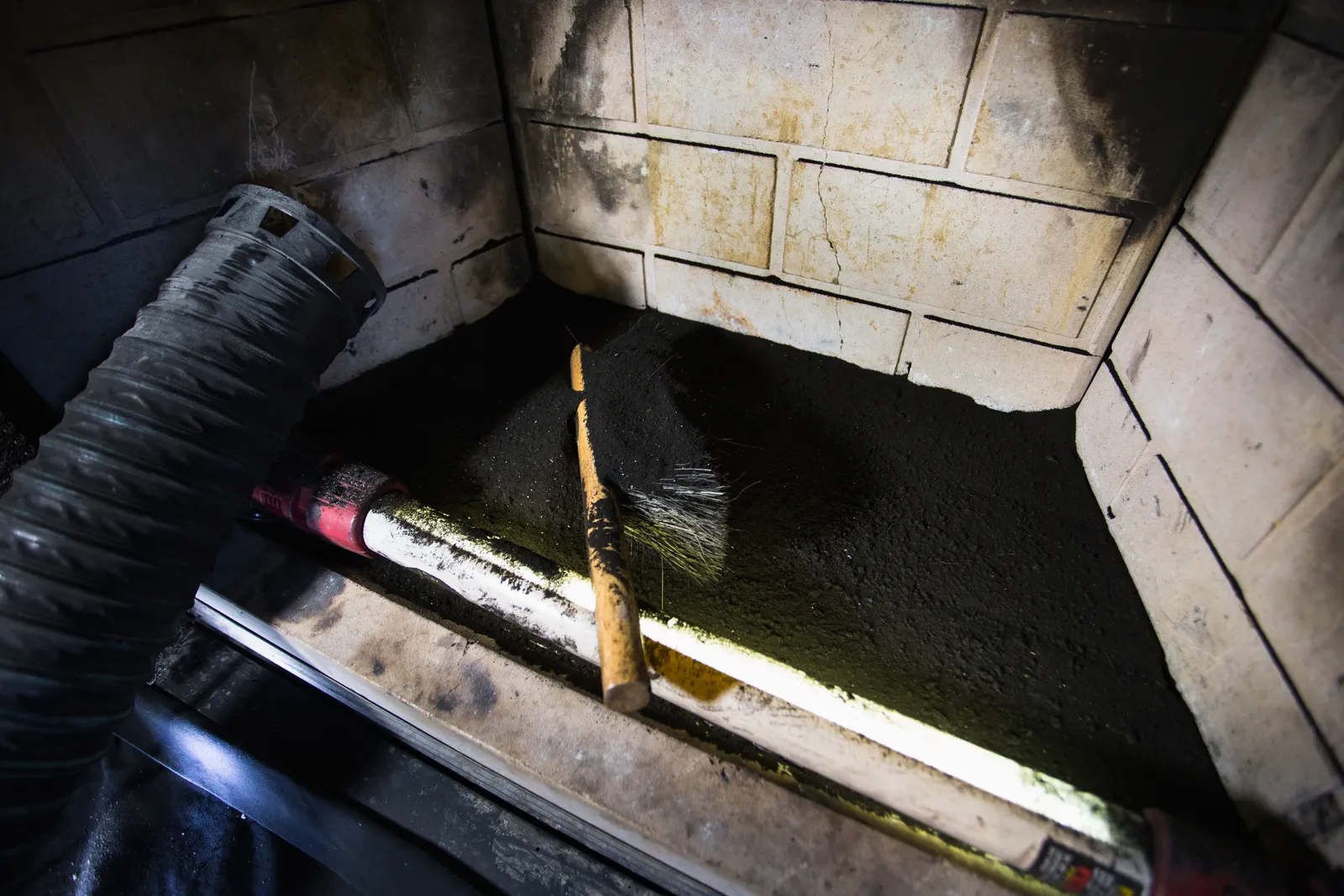
If creosote is the source, a chimney cleaning removes most of it. The other three causes need their own fixes, covered below.
Why the fireplace smells worse after rain
Dry creosote smells faint. Wet creosote smells strong. In the Valley, the National Weather Service counts monsoon season as June 15 through September 30 (NWS Phoenix), and winter storms bring another round of rain. That's when the calls come in. One homeowner told us, "The house has a notably ashy smell after the rains and we are very concerned about this." Another said, "We smell like a smoke smell like after the rain."
Wet creosote smells bad, especially in a dirty chimney with bird droppings. When a landlord called about a tenant's complaint, our team explained that "with all the rains and everything, she's smelling the smoke stains from the chimney."
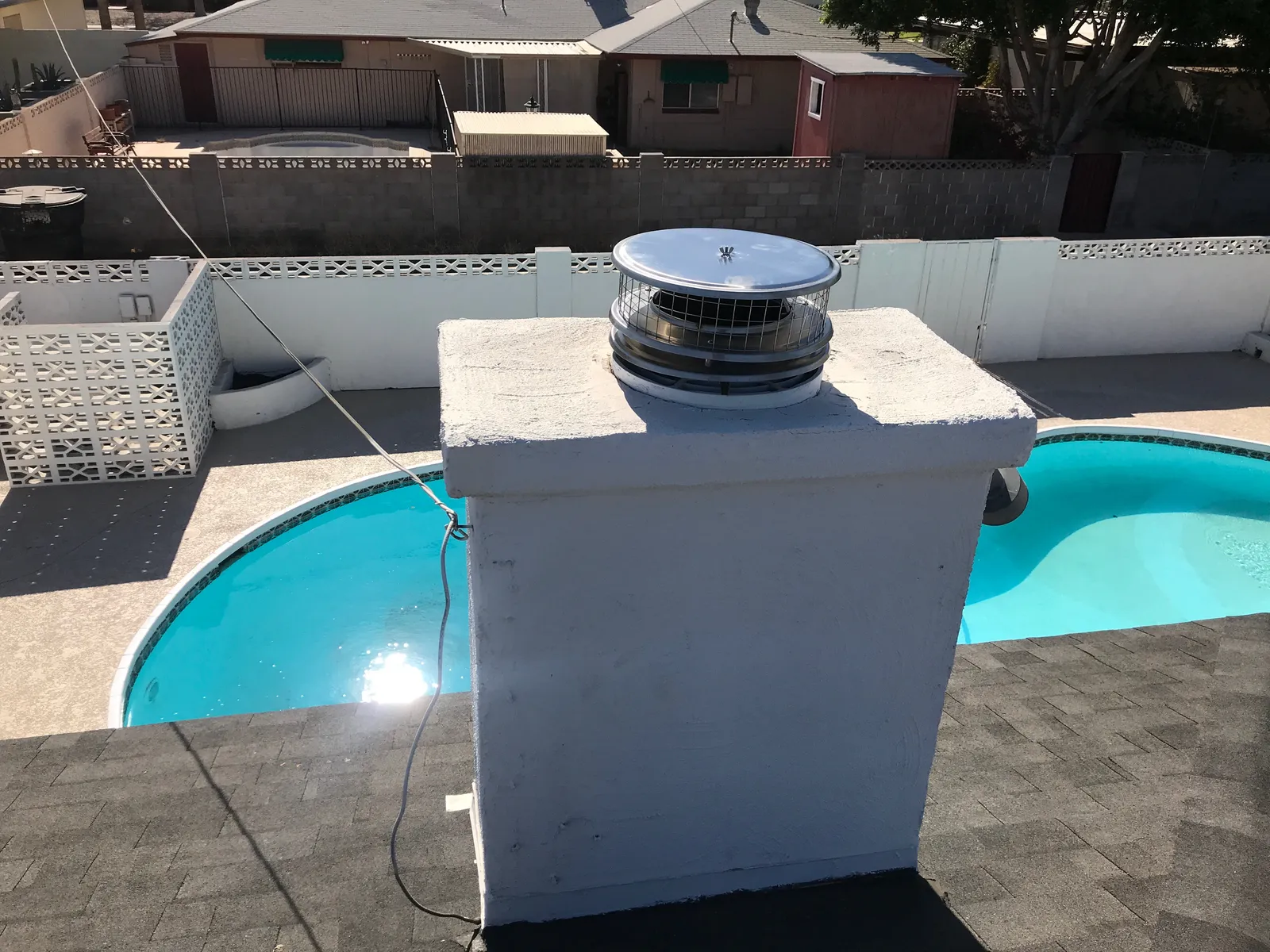
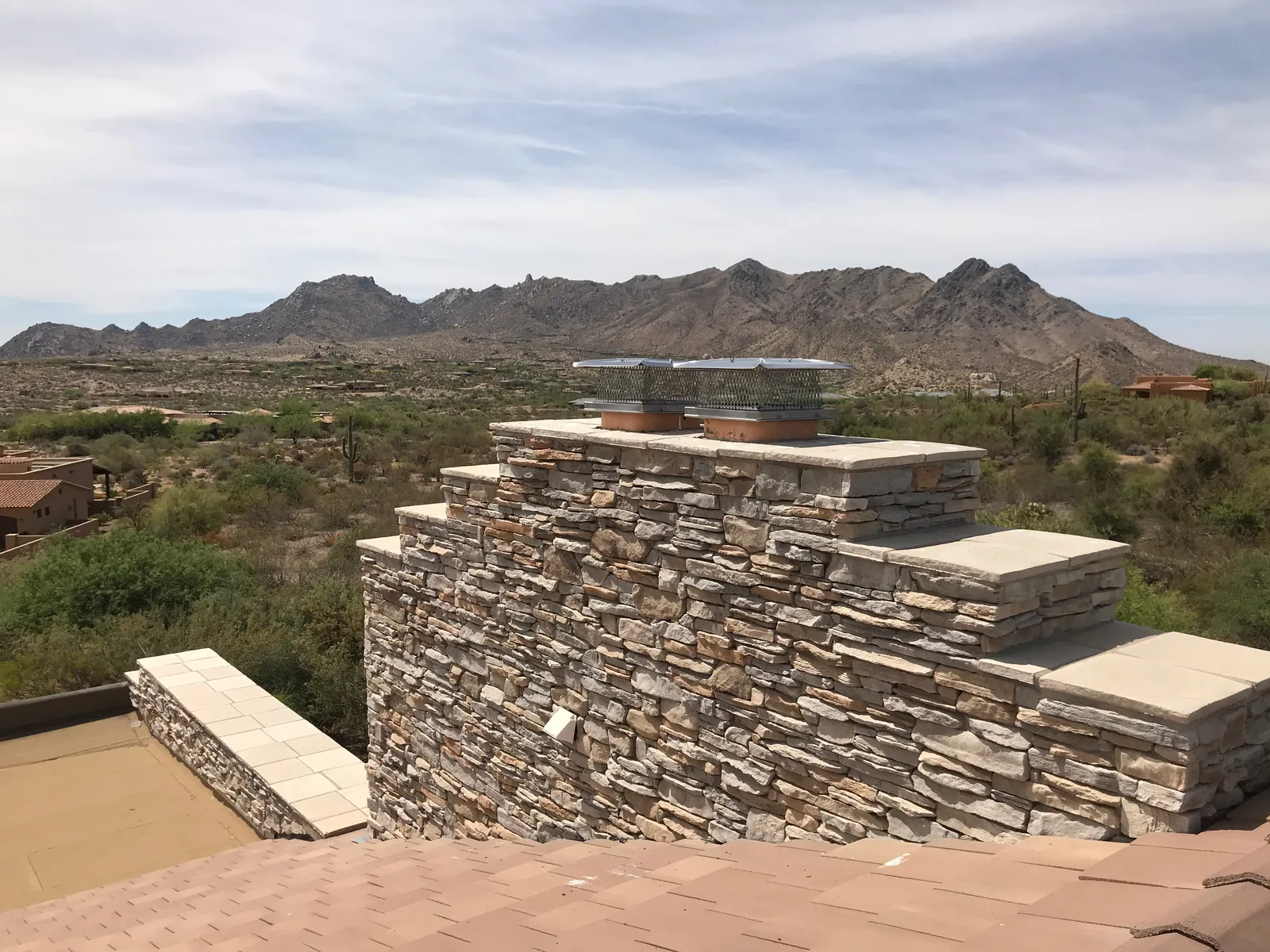
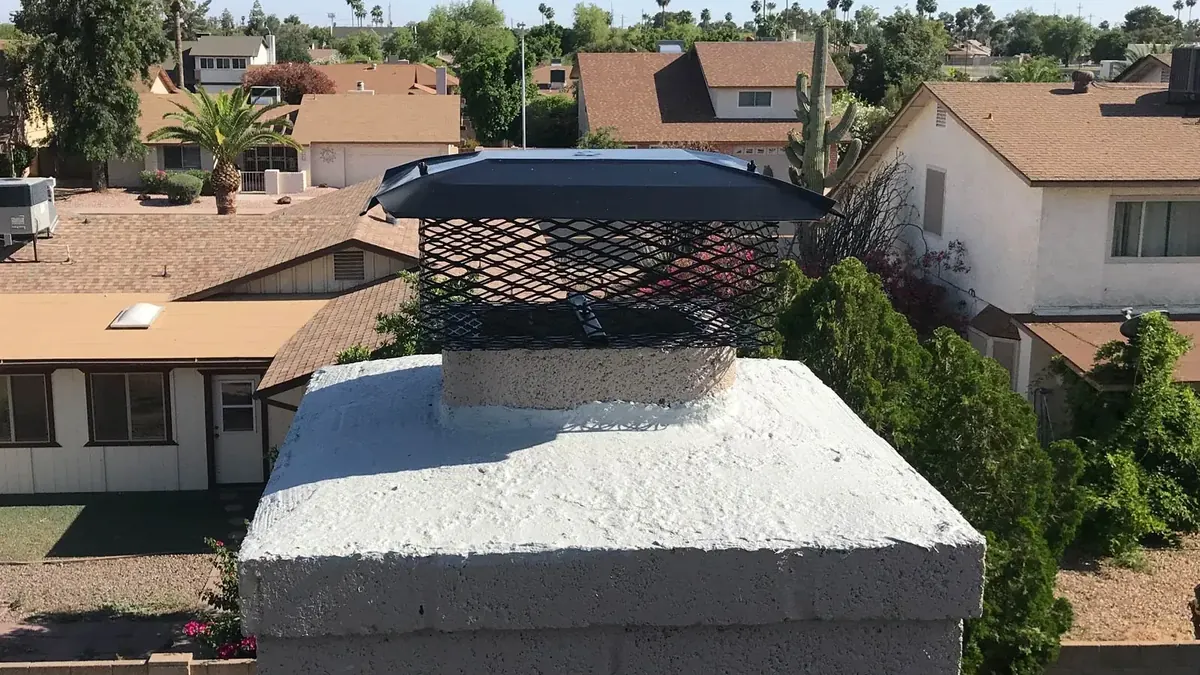
A chimney cap keeps out rain, animals and leaves, and it cuts down on odors and downdrafts. If water is getting in around the top of the chimney instead, the crown or chase may need work.
Why the smell comes into the room
A chimney is an open path between your living room and outside. When your house pulls in air, from a kitchen hood, bathroom fans, a running dryer or just a tightly sealed house, the chimney can become the easiest way in. A closed damper slows that air, but an old throat damper rarely seals tight.
Before you call anyone, a few checks from inside the house can narrow it down:
Could the smell be an animal?
Yes. Birds look for sheltered spots to nest, and an uncapped chimney is one. A foul or rotten smell, especially with sounds, feathers or flies, points to a nest or a trapped animal. One caller said, "I noticed like, some feathers in the bottom of the fireplace and I noticed a smell." Another described "a foul smell in the house, and it seemed to be coming from that fireplace area."
Don't light a fire to smoke an animal out. Keep the damper closed so it can't get into the house, and call for help. Bird removal and bird spikes are part of our chimney services.
Smell rotten eggs? That's not the chimney
What actually fixes a smelly fireplace
The fix depends on the cause, and often it's more than one.
- Creosote: a chimney cleaning to get the old creosote, dust and debris out.
- Rain: a chimney cap, and repairs to the crown if water gets in around the top.
- Animals: removal, cleaning out the nest and droppings, then a cap to keep them out.
- Air pulled down the flue: a top-sealing damper, which seals the flue when it's not in use.
We'll give you a straight answer: a cleaning usually helps a lot, but it may not take away every trace of smell. One of our team told a caller, "we can't guarantee that the smell is going to go away because a lot of the smell seep into the fireplace itself." Another put it this way: "Of course all fireplaces can smell even if they're clean." Getting the old creosote out is still the first step.
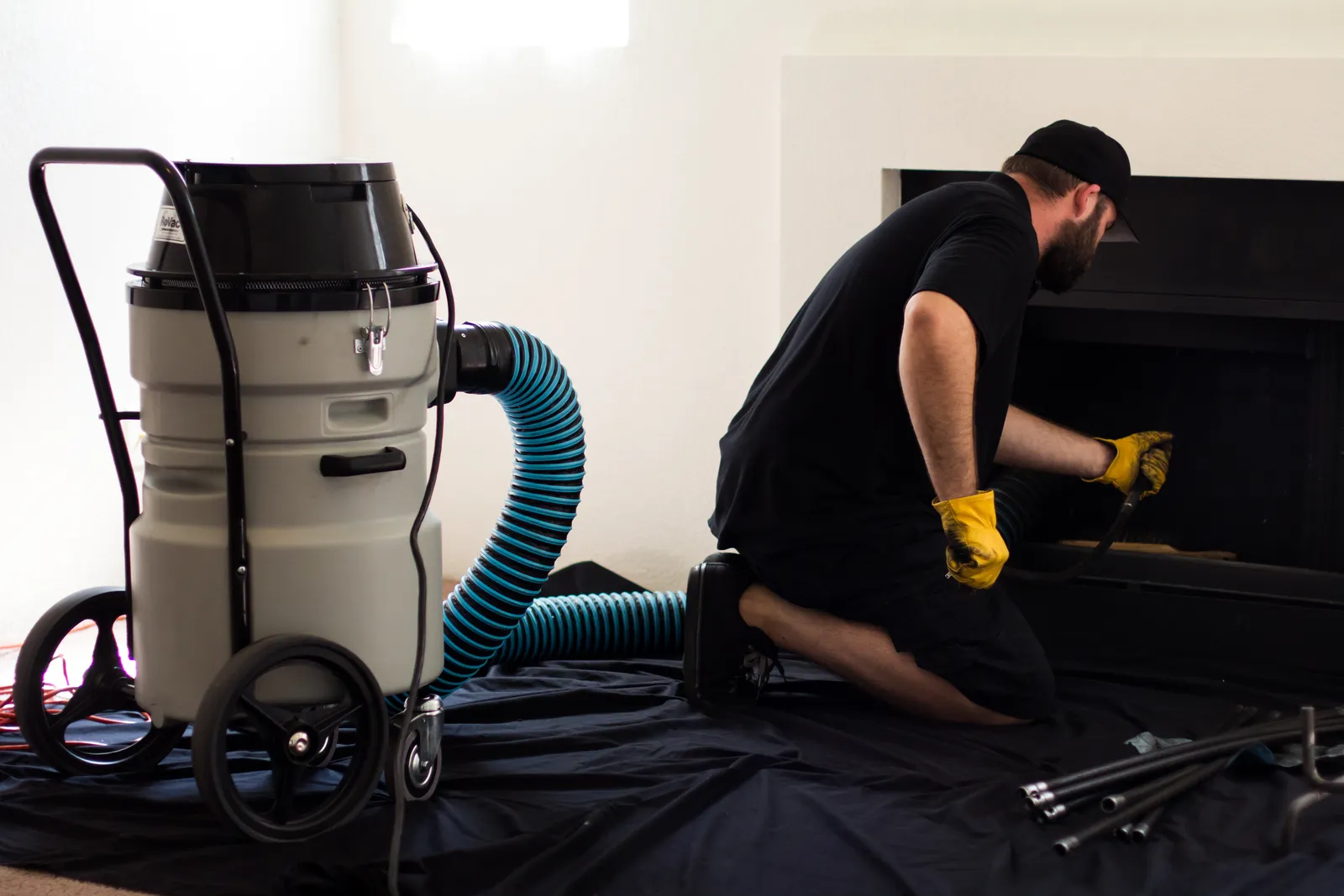
Every cleaning is a no-mess service, with drop cloths and HEPA vacuums. If you rarely use your fireplace, our post on why infrequent use still needs a clean chimney explains why it can still smell. We serve Phoenix and the towns on our service area page.
Fireplace smell questions
Will a chimney cleaning get rid of the smell?
If creosote is the cause, a cleaning removes most of it and usually makes a big difference. Some smell can stay in the brick, and rain, animals or air coming down the flue need their own fixes.
Why does my fireplace only smell after it rains?
Water wets the creosote and soot inside the chimney, and wet creosote smells much stronger. A cap keeps most rain out. If water is getting in around the top of the chimney, the crown may need repair.
Does a chimney cap help with the smell?
Yes. A cap keeps out rain, birds and leaves, and it cuts down on odors and downdrafts.
My fireplace smells but we never use it. What's going on?
Old creosote from past fires, rain, nests and air coming down the flue can all cause a smell in a fireplace that hasn't been used in years. An inspection will show which one it is.